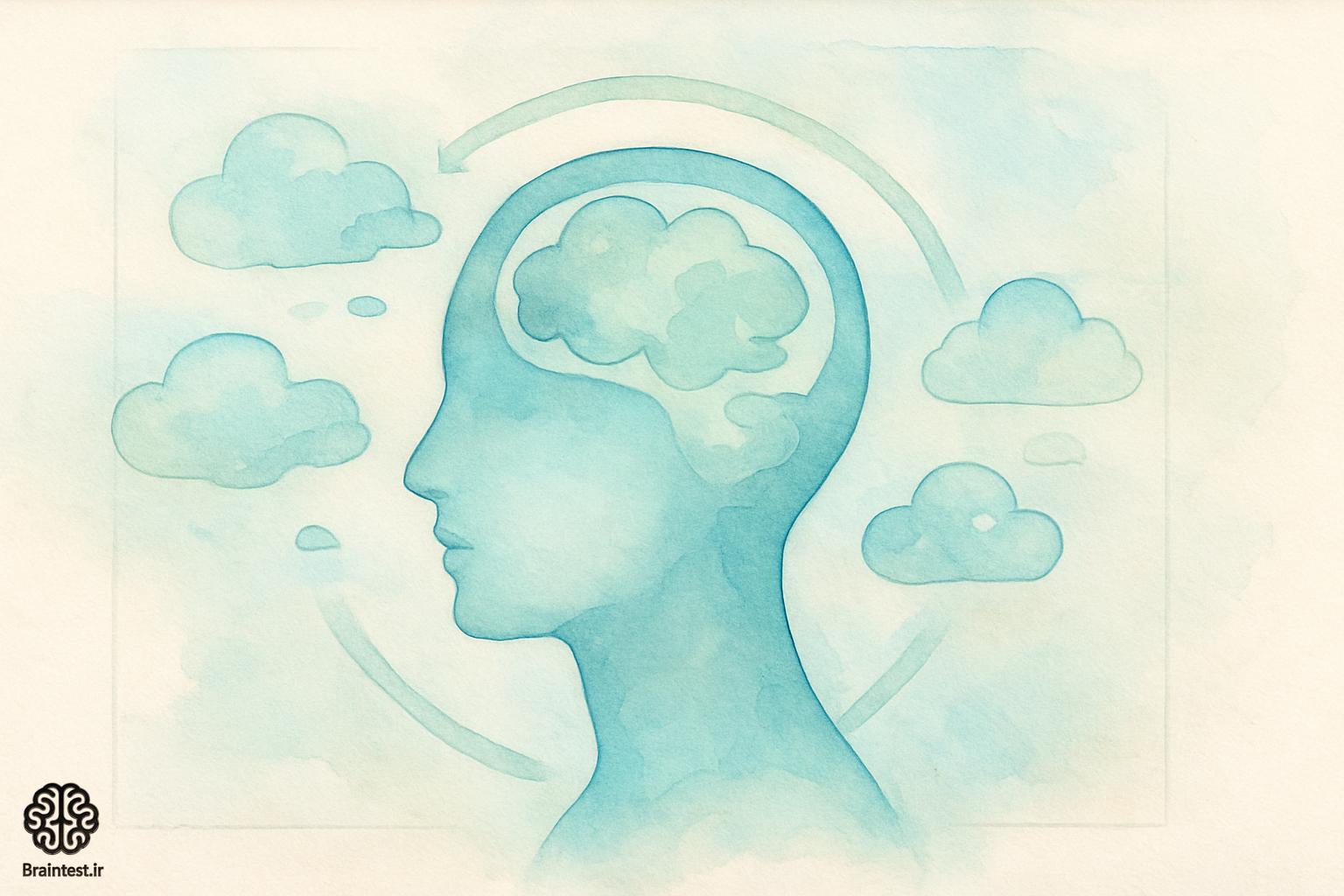
Everyday anxiety often forms from a series of quick, automatic interpretations—assumptions that are not necessarily accurate, but that the mind treats as fact. In cognitive psychology, these rigid and sometimes distorted interpretations are called cognitive errors, and they play a prominent role in maintaining ordinary daily worries. Recognizing these patterns and practicing thought revision can reduce the intensity of anxiety—not by completely eliminating worries, but by redirecting the mind away from negative cycles toward more realistic evaluation.
What are cognitive errors, and how do they contribute to everyday anxiety?
Cognitive errors refer to common patterns of thinking in which information is processed in a selective, exaggerated, or pessimistic way. These errors usually occur in three stages:
1) a cue or ambiguous signal is observed;
2) the mind quickly produces a certain—and sometimes catastrophic—conclusion;
3) the body and emotions align with that interpretation, and anxiety increases.
For many people, everyday anxiety is not merely a response to real danger—it is the result of ongoing, unrealistic interpretations of situations: “I’m not good enough,” “Something bad is definitely going to happen,” or “I’ve lost control of how things will go.” Over time, such thoughts can become habitual patterns of the mind and automatically activate in similar situations.
The cognitive mechanism of anxiety: from interpretation to maintaining cycles
At the cognitive level, anxiety is typically reinforced by a maintaining cycle:
- a negative automatic thought is triggered;
- signs that confirm that thought are searched for more or highlighted more;
- other signs are ignored;
- the mind generates a new conclusion that further increases anxiety.
This cycle can continue even when there is no evidence for the “worst-case scenario.” In fact, the mind is often more focused on achieving consistency with the initial interpretation than on objectively searching for reality.
Common cognitive errors seen in everyday anxiety
Understanding the different types of cognitive errors helps you better recognize personalized patterns of anxiety. Some of the most common include:
1) Catastrophizing
In this error, the likelihood of severe consequences is overly magnified. The mind moves from a small cue to a much heavier outcome. The result is usually a sharp increase in physical arousal: a racing heart, muscle tension, or difficulty concentrating.
2) Overgeneralization
When a bad experience or a failure occurs, the mind extends it to all situations. Instead of “This time it was hard,” it becomes “It’s always like this,” or “I fail at everything.”
3) Mind reading
In this pattern, others’ behavior is interpreted in advance, without sufficient evidence. The mind may conclude that others have a negative judgment of you, even though real evidence does not support that.
4) Harsh shoulds (extreme demands)
Statements like “I should be excellent,” “I must not make mistakes,” or “It has to be solved quickly” create pressure on the mind. Even when realistic standards are met, the mind still feels disappointment, and anxiety remains high.
5) Magnifying threats and minimizing resources
In this error, danger is seen as more prominent, while coping abilities, available plans, or past experiences are assumed to be less important. The result is that the mind sends a message of “inadequacy.”
6) Predicting the future with certainty
In this situation, the mind passes judgment on the future with certainty: “It’s definitely going to fall apart,” “It will happen, without a doubt.” This certainty accelerates anxiety even when there is no evidence.
7) Labeling
Instead of describing a behavior or a mistake, identity is turned into a label: “I’m a bad person,” “I’m incompetent.” Labeling is usually heavier than behavioral criticism and reduces the mind’s flexibility.
Why do cognitive errors become more pronounced during certain periods of life?
Cognitive errors are not just the product of a single moment; their roots may lie in psychological development, social experiences, and learning patterns.
In developmental psychology, many people learn along the way how to regulate emotions, including learning to view threats more seriously and to be prepared for uncertainty. If this learning comes with ongoing stress, the mind may get accustomed to “quick guessing and conclusions” instead of “reviewing the situation.”
From the perspective of social psychology, judging others—whether real or perceived—can intensify errors like mind reading or harsh shoulds. In environments where social comparison is common, the mind is more likely to react to signs of failure or rejection and activate negative interpretations more quickly.
In personality and clinical psychology as well, certain traits—such as perfectionism, sensitivity to uncertainty, or inflexible thinking styles—can increase the likelihood of cognitive errors occurring or persisting. This does not mean that the errors are “solely due to personality,” but it can explain why some people get trapped in anxiety cycles.
Self-assessment guide: observing patterns without judgment
Self-assessment in this context does not mean clinical diagnosis. The goal is to more carefully observe thoughts in the moment and turn them into data that can be examined. A simple yet effective framework usually includes these steps:
Step 1: Record the situation and the trigger cue
In everyday anxiety, cues are often seen before thoughts: bodily tension, mental rush, or heaviness in the chest. Recording the situation and the time it occurred helps pull the thought out of ambiguity.
Step 2: Record the exact sentence of the automatic thought
Instead of broad descriptions like “I got worried,” it’s better to record the exact sentence that forms in your mind. Automatic thoughts are usually short, certain, and result-oriented.
Step 3: Identify the dominant cognitive error
After recording the thought, you can compare its pattern to common cognitive errors. Sometimes a single thought reflects multiple errors at once—such as a combination of catastrophizing and certain future prediction.
Step 4: Check the evidence for and against
At this stage, the mind shifts from “certain interpretation” to “evaluating evidence.” Evidence in favor usually reflects part of reality, while evidence against shows why the initial conclusion was exaggerated.
Step 5: Assess the intensity of emotion and behavioral consequences
Alongside the thought, you should also record the intensity of anxiety and the type of behavioral response: avoidance, extreme perfectionism, reassurance-seeking (repeated behaviors to reduce doubt), or prolonged mental engagement.
Step 6: Develop realistic alternative thoughts
Alternative thoughts should not be mere “positive thinking.” The goal is balance: less certain conclusions, attention to different possibilities, and reminders of coping resources. A realistic alternative thought usually aligns more closely with logic and experience.
Thought revision: from mental stickiness to cognitive flexibility
Thought revision becomes effective when the mind analyzes a thought instead of fighting it. There are several well-known methods for revision:
1) Logical reality testing
This method emphasizes the “logical nature of the conclusion”: based on the available evidence, is such a conclusion actually inferable? Or has the line of thinking jumped from a small cue to an exaggerated conclusion?
2) Cognitive distancing
With cognitive distancing, the thought is seen as “a mental event,” not a certain verdict. The mind can replace the phrasing with something like: “This is an interpretation, not complete truth.” Such distance typically reduces anxiety intensity.
3) Rewriting with language of possibility
Instead of “It will definitely fall apart,” try “It’s possible that it will become difficult,” or “Without experience, making an accurate prediction is hard.” Changing the wording from certainty to possibility creates mental flexibility.
4) Focus on practical, action-oriented options
A significant part of anxiety is fueled by a sense of helplessness or lack of control. Thought revision is strengthened when it is paired with a small, doable action—one that shows control has not completely disappeared. This approach aligns with clinical and cognitive psychology, because it changes the anxiety cycle simultaneously through both cognitive and behavioral pathways.
Common patterns in everyday anxiety and cognitive examples
Understanding errors becomes clearer with concrete examples. Examples of typical anxiety pathways:
- After a work conversation, a thought like “They probably formed a bad impression of me” is triggered; this is mind reading and is usually reinforced by searching for more signs.
- Before an event, a thought like “If I make a mistake, everything will fall apart” forms; this is a combination of catastrophizing and harsh shoulds.
- After a small setback, the mind creates “I always fall behind”; overgeneralization and magnifying the mistake are common in this pattern.
Effective revision in each case means setting aside a certain conclusion and reintroducing evidence, probabilities, and coping resources into the calculation.
When should you consider getting professional help?
The general rule is that self-assessment can be a useful tool for understanding cognitive patterns. However, professional evaluation becomes important when anxiety repeatedly disrupts daily functioning, significantly affects sleep, or comes with severe, exhausting physical symptoms. Psychologists and mental health professionals can help examine cognitive patterns in greater depth and support emotion regulation using evidence-based methods. This recommendation is not meant as a blanket instruction for everyone, but it provides a cautious framework for serious cases.
Summary
Everyday anxiety is often the result of automatic, distorted interpretations of situations. Cognitive errors such as catastrophizing, overgeneralization, mind reading, and certain future prediction create a cycle in which negative thoughts turn into feelings of anxiety and then into maintaining behaviors. Regular self-assessment—recording the situation, recording the exact sentence of the automatic thought, identifying the dominant error, checking the evidence for and against, and revising using language of possibility and logic—provides a practical tool for increasing cognitive flexibility. Ultimately, thought revision does not mean denying worry or adopting fake optimism; it means replacing certain and inaccurate interpretations with more realistic evaluation, and this fundamental change turns the path of anxiety from automatic repetition into conscious choice.